How to Become a Freelancer: A Beginner's Step-by-Step Guide
Learn how to become a freelancer with no experience. Follow our step-by-step roadmap to pick a skill, build a portfolio, set rates, and land clients.
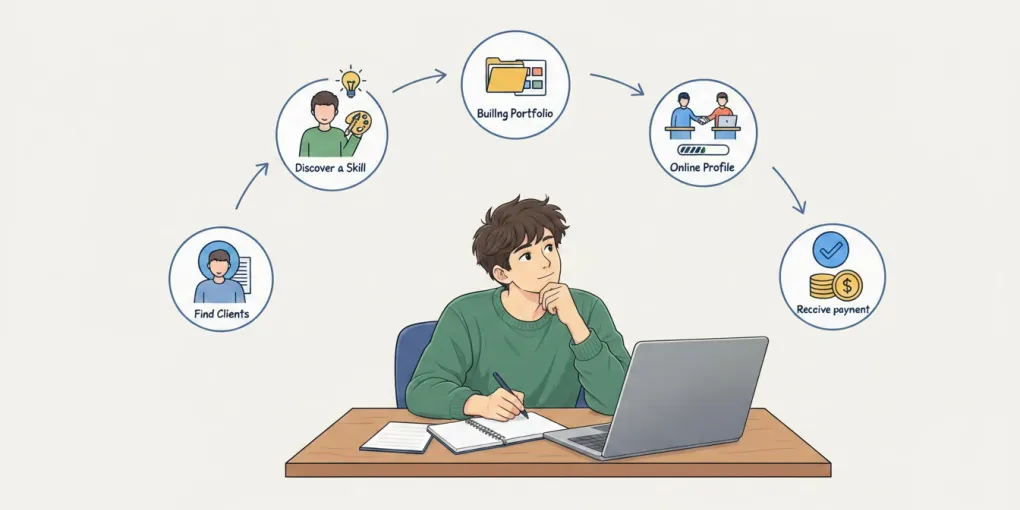
Starting an independent career can feel overwhelming if you are unsure where to begin. You might be asking yourself: Which skill should I offer? How do I find clients when I have zero reviews? How much should I charge? If you want to know how to become a freelancer and build a sustainable income on your own terms, you are in the right place.
The global workforce is undergoing a massive transformation. Millions of professionals are leaving rigid office schedules to build a flexible freelance career. Whether you are transitioning from a full-time role or starting completely from scratch, freelancing for beginners is a viable and structured path when approached with a clear strategy.
In this practical, step-by-step guide, you will learn exactly how to start freelancing with no experience, create an irresistible portfolio, set competitive rates, and land your very first paying clients.
What You Need Before You Start
Before diving into client outreach, it helps to understand the baseline foundations. If you are new to the concept of independent contracting, be sure to review our foundational guide on what is freelancing to understand the core business model.
To launch successfully as a beginner freelancer, you need three core elements:
- A marketable digital skill: Something people are willing to pay money to have solved or built.
- Proof of competence: Samples or case studies demonstrating you can deliver results.
- A client acquisition channel: A reliable way to connect with people who need your services.
Step 1: Identify Your Marketable Skill
You do not need a decade of experience to launch a freelance career. Many high-demand freelance jobs for beginners rely on skills you can learn or polish relatively quickly.
Beginner-Friendly Skill Categories
| Category | Typical Beginner Services | Recommended Tools |
|---|---|---|
| Writing & Content | Blog posts, website copy, product descriptions, email newsletters | Google Docs, Grammarly, WordPress |
| Graphic Design | Social media graphics, logos, presentation decks, thumbnails | Figma, Canva, Adobe Illustrator |
| Digital Marketing | SEO audits, social media management, Google Ads setup | Google Analytics, Meta Ads Manager, Ahrefs |
| Video Production | Short-form Reels/TikToks, YouTube editing, subtitles | CapCut, Adobe Premiere Pro, DaVinci Resolve |
| Administrative Support | Data entry, email management, customer service, scheduling | Notion, Excel, Google Sheets, Slack |
Looking for specific career tracks? Check out our detailed deep-dives on freelance writing, video editing freelance, and becoming a digital marketing freelancer.
Step 2: Define a Focused Niche
A common mistake made by new freelancers is trying to be a “generalist who does everything for everyone.” Specializing helps you stand out immediately against broad competition.
Instead of positioning yourself as:
- “I am a general writer” ➔ Position as: “I write SEO blog articles for B2B SaaS companies.”
- “I am a video editor” ➔ Position as: “I edit high-engagement short-form video hooks for fitness coaches.”
- “I am a graphic designer” ➔ Position as: “I design investor pitch decks for early-stage startups.”
Niche positioning makes it easy for potential clients to immediately recognize that you are the exact specialist they need.
Step 3: Build a High-Converting Portfolio (Even with No Prior Clients)
One of the biggest hurdles beginners face is: “How do I get a portfolio if I have never had a client?”
You do not need paid client work to build a compelling portfolio. You only need to demonstrate your ability to solve problems.
       Methods to Build a Beginner Portfolio
       +------------------------------------+
       | 1. Create 3 In-Depth Spec Projects |
       | 2. Redesign or Rewrite Real Brands |
       | 3. Volunteer for Non-Profits/Local |
       | 4. Publish Case Studies on Medium  |
       +------------------------------------+
3 Ways to Create Instant Portfolio Samples
- Build Speculative (“Spec”) Work: Create 3 mock projects that mirror the exact deliverables clients pay for. If you design websites, build a full landing page for a fictional brand.
- Solve Real Public Problems: Find an existing company with a poorly written blog post or outdated social media graphics. Rewrite or redesign it, then present your version alongside an explanation of why your changes improve performance.
- Host Your Work Professionally: Use free or low-cost portfolio platforms such as Behance, GitHub, Notion, Contently, or a simple single-page website.
Step 4: Choose Your Freelance Platforms
Once your portfolio is ready, you need to place yourself where paying clients look for talent.
1. Freelance Marketplaces
Platforms like Upwork and Fiverr aggregate thousands of active job postings daily. To learn how to optimize your proposals and profile, read our complete guide on Upwork for freelancers.
2. General Marketplaces vs Specialized Hubs
Different platforms cater to different skill levels, industries, and project sizes. To choose the right platform for your niche, explore our curated list of the best freelancing sites.
3. Direct Cold Outreach & Networking
Sending personalized, value-first emails or LinkedIn connection requests directly to founders, marketing managers, and creative directors is one of the highest-paying ways to secure long-term contracts.
Step 5: Set Your Initial Pricing Strategy
Determining how much to charge is a frequent point of confusion for beginner freelancers. Here is how to structure your rates:
+--------------------------------------------------------------------+
|                         Pricing Models Comparison                  |
+-------------------+--------------------+---------------------------+
| Pricing Model     | Best Used For      | Advantage                 |
+-------------------+--------------------+---------------------------+
| Hourly Rate       | Variable tasks     | Paid for every hour worked|
| Fixed Project Fee | Defined deliverables| Encourages efficiency     |
| Monthly Retainer  | Ongoing services   | Predictable recurring pay |
+-------------------+--------------------+---------------------------+
Recommended Beginner Formula
- Calculate your minimum acceptable hourly rate: Determine your monthly living expenses, divide by billable hours (aim for 20–25 billable hours per week, not 40, to account for admin time), and add 30% for taxes and savings.
- Start competitive, but do not race to the bottom: Underpricing hurts your credibility. Charge a fair beginner market rate, gather 3 to 5 positive client reviews, and immediately increase your rates by 20–30%.
Not sure what to charge? Use the free GigPilot AI Freelance Rate Calculator to accurately estimate your ideal hourly rate, daily rate, and fixed project quotes with built-in tax and expense buffers.
Step 6: Write Winning Proposals that Get Responses
When applying for freelance jobs online, generic proposals get ignored. Follow this proven 4-part proposal formula:
1. The Hook: Acknowledge the client's specific problem in the very first sentence.
2. The Solution: Briefly outline your step-by-step plan to resolve their challenge.
3. Proof & Relevance: Link directly to 1 or 2 relevant portfolio pieces (not your entire library).
4. Low-Friction Call to Action: Suggest a brief 10-minute chat or ask an engaging question about the project.
Step 7: Manage Projects and Build Long-Term Relationships
Winning the contract is only half the battle. How you manage the project determines whether a client hires you once or keeps paying you for years.
- Communicate Proactively: Send brief progress updates before the client has to ask.
- Meet Deadlines Consistently: If an unexpected delay occurs, notify the client early with an updated timeline.
- Ask for Reviews and Referrals: Once a project concludes successfully, immediately ask for a written testimonial and ask if they know anyone else who needs your services.
If you are planning to work primarily from home, organizing your daily schedule is vital. Read our practical guide to freelancing work from home for productivity frameworks.
Frequently Asked Questions (FAQ)
How can I start freelancing with no experience?
Pick one specific skill, create 2 to 3 mock projects or case studies to demonstrate your capability, create a free portfolio, and pitch clients on platforms like Upwork, Fiverr, or LinkedIn with tailored proposals.
How much money can a beginner freelancer make?
Beginner earnings vary widely depending on skill and dedication. Part-time freelancers commonly earn between $500 and $2,000 per month within their first 3 to 6 months, while full-time specialists can scale to $4,000–$8,000+ monthly as their reputation grows.
Do I need a college degree to become a freelancer?
No. The vast majority of freelance clients care about your portfolio, past work quality, communication skills, and ability to meet deadlines rather than formal academic credentials.
How long does it take to get your first freelance client?
With consistent daily pitching (sending 3 to 5 high-quality, customized proposals each day), most beginners land their first paying client within 2 to 6 weeks.
Should I quit my job before starting freelancing?
It is generally safer to start freelancing as a side hustle while maintaining your primary job. Transition to full-time freelancing once your freelance income consistently matches 70–100% of your day job salary for at least 3 consecutive months.
Summary and Next Steps
Learning how to become a freelancer is a journey of continuous improvement. By focusing on a clear skill, assembling tangible proof of your work, and pitching consistently with value-driven proposals, you can build a flexible, independent career.
Ready to find your first client? Compare platforms on the best freelancing sites or learn the secrets of craft-specific freelancing in our guides on freelance writing and digital marketing freelancer opportunities.